SURGICAL SCAR & KELOID TREATMENT AT VILVA COSMETICS
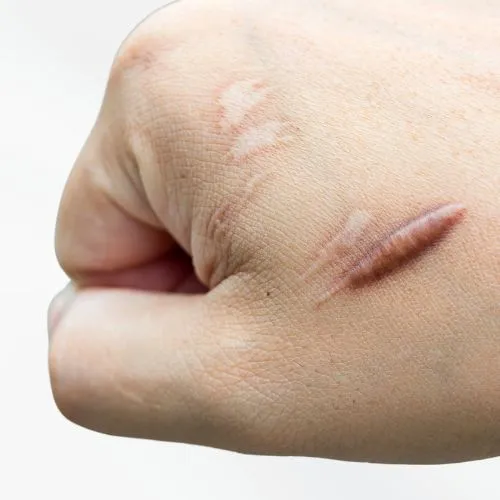
Scars and Keloids are the body's natural response to skin injury, but they can sometimes be a cosmetic or physical concern. While scars are a normal part of the healing process, keloids are an overgrowth of scar tissue that extends beyond the original wound boundaries. At Vilva Cosmetics, we offer surgical solutions to revise and minimize the appearance of both scars and keloids, aiming to restore a smoother, more even skin texture and boost your confidence.
Surgical Treatment at Vilva Cosmetics
Our expert surgeons utilize various surgical techniques, including scar revision, surgical excision of keloids, and advanced suturing methods. Scar revision involves carefully re-cutting the scar and repositioning the skin to create a less noticeable, flatter, and more aesthetically pleasing scar. Keloid excision is the precise removal of the keloid, often followed by adjunctive therapies to prevent recurrence.
During your personal consultation at Vilva Cosmetics in Erode, our expert plastic surgeons will thoroughly assess your scar or keloid, discuss the best course of action, and create a customized treatment plan. We will explain the procedure, potential outcomes, and the crucial post-operative care needed to ensure the best possible results.
Surgical Scar & Keloid Treatment Details
Procedure Time
30 Minutes - 1 Hour
Anaesthesia
Local Anaesthesia
Nights In Hospital
Day Case
Pain And Discomfort
Mild, managed with OTC pain relievers
Risks - Common
Minor swelling, bruising, discomfort
Risks - Uncommon
Infection, wound separation, scar recurrence (especially keloids)
Follow-Up Appointments
1 week (for suture removal)
Time Off Work
0 - 1 Day
Sports And Exercise
1-2 weeks post-op - light activity
Result
Initial improvement is immediate, with final results visible after 6-12 months as the new scar matures.
Why Choose Surgical Scar & Keloid Treatment?
Surgical intervention for scars and keloids is often the most effective approach for several reasons:
- To flatten and narrow wide or raised scars, making them less prominent.
- To remove painful, itchy, or restrictive scars that limit movement.
- To excision of keloids, followed by other treatments to prevent recurrence.
- To reposition a scar that is in a cosmetically unfavorable location (e.g., across a facial feature).
- To achieve a more uniform and aesthetically pleasing skin surface.
FREQUENTLY ASKED QUESTIONS – SCARS AND KELOIDS
What is the difference between a scar and a keloid?
A scar is the body's normal response to injury, but it can be wide, raised, or discolored. A keloid is an abnormal, aggressive overgrowth of scar tissue that extends beyond the original wound boundaries and can continue to grow over time. Keloids are more common in individuals with darker skin tones and in certain body areas like the chest, shoulders, and earlobes.
How is the surgical treatment performed?
The procedure is performed under local anaesthesia. For a scar revision, the surgeon will remove the old scar tissue and carefully suture the skin together to create a thinner, less noticeable scar line. For a keloid, the keloid is surgically removed, and this is often followed by other treatments like corticosteroid injections or radiation therapy to prevent recurrence.
Does surgical treatment guarantee the scar won't come back?
For scars, surgical revision significantly improves their appearance, but a new scar will form. The goal is a less prominent one. For keloids, there is a risk of recurrence, which is why surgical excision is often combined with other therapies like steroid injections or radiation to drastically reduce this risk.
How long is the recovery?
Recovery is relatively quick. The incision site will be tender and possibly swollen for a few days. Stitches are typically removed after one week. You should avoid any strenuous activity that puts tension on the wound for at least 1-2 weeks.
Will I have a new scar?
Yes, surgical treatment will always result in a new scar. The goal is to create a finer, flatter, and less noticeable scar than the original one. The appearance of the new scar will continue to improve over 6-12 months.
RISKS AND COMPLICATIONS
What are the possible risks?
Risks include infection, bleeding, poor wound healing, asymmetry, and in the case of keloids, a high risk of recurrence. Our team at Vilva Cosmetics will discuss all potential risks and the necessary preventative measures during your consultation.
AFTERCARE
What should I do to care for the wound after surgery?
You will be given specific instructions for wound care. This typically involves keeping the area clean and dry, avoiding direct sun exposure, and applying any prescribed ointments. Wearing a pressure garment or using silicone gel/sheets may also be recommended to aid in scar maturation and prevent recurrence.
Pre-Operative Instructions – Scar & Keloid Treatment
One Week Before Surgery
- Stop taking aspirin, ibuprofen, and other blood-thinning medications as directed by your surgeon.
- Avoid herbal supplements like ginseng, garlic, vitamin E, and fish oil.
- If you are a smoker, stop smoking at least 2 weeks before surgery to ensure proper healing.
- Inform your surgeon of any medications or supplements you are currently taking.
Day Before Surgery
- Thoroughly clean the area to be treated with soap and water the night before and the morning of the surgery.
- Do not apply any creams, lotions, or makeup to the treatment area.
- Arrange for transport if the procedure is in a sensitive area and you feel it will be too uncomfortable to drive.
- Ensure any prescribed post-operative medications are filled and ready.
Morning of Surgery
- Do not apply any makeup, deodorant, or nail polish.
- Remove all jewelry and piercings.
- Eat a light meal before the procedure, unless otherwise instructed.
- Wear comfortable, loose clothing that does not constrict the treatment area.
Medications & Lifestyle
- Continue prescribed chronic medications only if approved by your surgeon.
- Avoid alcohol for at least 48 hours before surgery.
- Inform your surgeon immediately if you feel ill (e.g., have a cold, flu, or fever).
Post-Operative Instructions – Scar & Keloid Treatment
Wound Care & Hygiene
- Keep the incision site clean and dry. Follow your surgeon's specific instructions for cleaning and dressing changes.
- Avoid getting the wound wet for the first 24-48 hours.
- Do not touch, rub, or pick at the stitches or scab.
- Protect the new scar from direct sun exposure for at least 6 months to prevent hyperpigmentation.
Activity & Lifestyle
- Avoid strenuous activities, heavy lifting, and activities that stretch the skin around the incision for at least 1-2 weeks.
- Do not wear tight clothing that could rub against the healing area.
- Avoid activities that could cause sweating in the area of the incision, as this can increase the risk of infection.
Medications & Pain
- Take your prescribed pain medication as directed. Over-the-counter pain relievers are often sufficient.
- Applying a cold compress to the area for 10-15 minutes at a time can help reduce swelling in the first 24 hours.
- Contact your surgeon immediately if you experience a high fever, severe pain, or excessive redness or discharge.
Scar Management & Recovery
- The stitches will be removed during your follow-up appointment, typically one week after surgery.
- Your surgeon may recommend a silicone gel or sheets, pressure garments, or other therapies to help flatten and improve the appearance of the new scar as it matures.
- Be patient, as the full result of scar revision can take up to a year to become final.
Scar & Keloid Treatment Results
At Vilva Cosmetic Science and Speciality Centre, our advanced scar and keloid treatments help reduce raised, discolored, and uncomfortable scars, restoring smoother and clearer skin. Explore the before-and-after results below.
Before Treatment
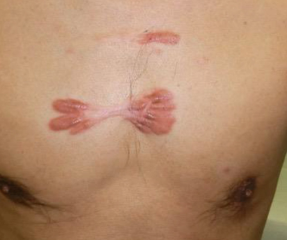
Visible raised keloid and scar tissue before treatment.
After Treatment
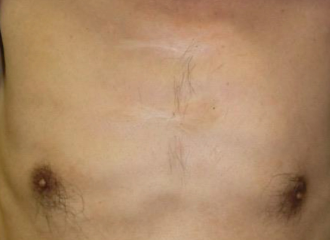
Smoother, lighter skin after scar and keloid reduction therapy.