
DENTAL IMPLANTS AT VILVA COSMETICS
Dental Implants are a modern, highly effective, and permanent solution for replacing missing teeth. An implant consists of a small, titanium post that is surgically placed into the jawbone, acting as a sturdy root for a prosthetic tooth (crown). Over time, the implant fuses with the jawbone in a process called osseointegration, providing an incredibly strong and stable foundation. At Vilva Cosmetics, our expert dental surgeons use advanced techniques to restore your smile with implants that look, feel, and function just like natural teeth.
Our Approach to Dental Implants at Vilva Cosmetics
At Vilva Cosmetics, we follow a meticulous and personalized approach to dental implants. Our process begins with a comprehensive consultation and a detailed 3D scan of your jaw to determine if you are a suitable candidate. We then create a precise treatment plan, including the placement of the implant and the design of the custom crown. The implant procedure is performed in a sterile and comfortable environment under local anaesthesia to ensure a pain-free experience. Our team will guide you through every stage, from the initial surgery to the final placement of your beautiful, new tooth.
We are dedicated to providing you with a long-lasting solution that not only restores your smile but also preserves your jawbone health. Our clinic in Erode, Tamil Nadu, is committed to delivering exceptional care and results that will give you the confidence to smile, speak, and eat without hesitation.
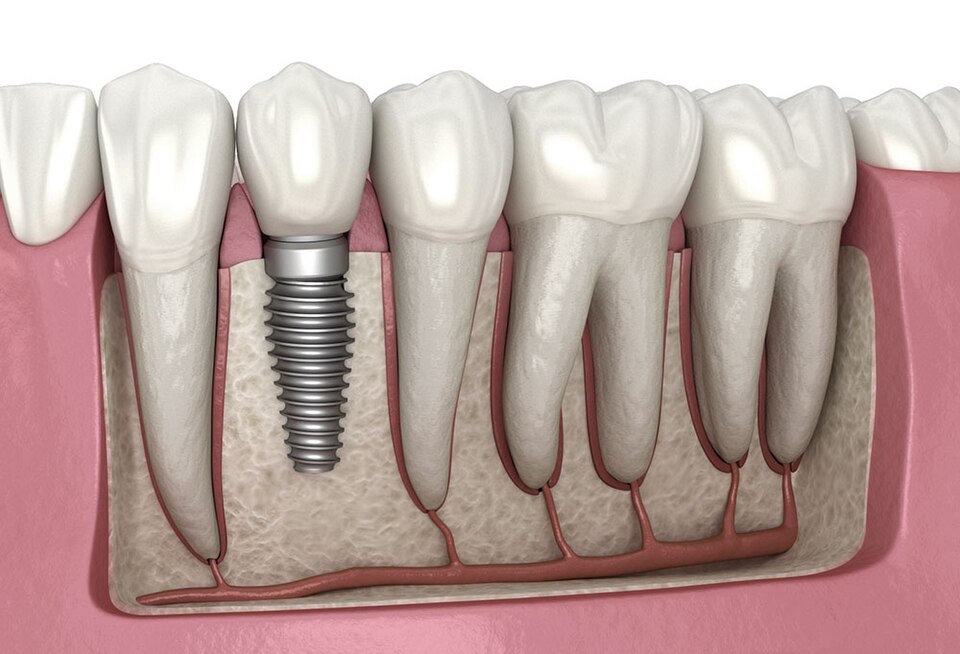
Dental Implants Details
Procedure Time
60 - 90 minutes per implant
Anaesthesia
Local anaesthesia
Downtime
1 - 3 days of limited activity; 3-6 months for osseointegration
Pain And Discomfort
Moderate post-surgery, managed with pain medication
Risks - Common
Swelling, bruising, minor bleeding, infection
Risks - Uncommon
Nerve damage, implant failure
Follow-Up Appointments
Multiple appointments for healing and final crown placement
Time Off Work
1 - 2 days recommended
Sun Exposure
No restrictions
Result
Permanent, natural-looking tooth replacement, lasts a lifetime
Why Choose Dental Implants?
Dental implants are considered the gold standard for tooth replacement due to their numerous advantages over other options:
- They are a **permanent solution** that can last a lifetime with proper care, unlike bridges or dentures that may need replacement.
- They **feel and function just like natural teeth**, allowing you to eat, speak, and smile with complete confidence.
- Implants **preserve your natural jawbone**, preventing the bone loss that occurs after a tooth is lost. This helps maintain your facial structure and prevents a "sunken" appearance.
- Unlike dental bridges, implants do not require altering or grinding down adjacent healthy teeth, preserving more of your natural tooth structure.
- Implants are **highly successful**, with a success rate of over 95% when performed by a qualified professional.
FREQUENTLY ASKED QUESTIONS – DENTAL IMPLANTS
Is the dental implant procedure painful?
The implant placement procedure itself is not painful, as the area is numbed with local anaesthesia. You may experience some moderate discomfort, swelling, and bruising in the days following the surgery, but this can be effectively managed with pain medication.
How long does the entire implant process take?
The process can take several months. The initial surgery to place the implant is followed by a healing period of 3-6 months, during which the implant fuses with the jawbone (osseointegration). After this, the final crown is placed. Your dentist will provide a detailed timeline.
Am I a good candidate for dental implants?
Ideal candidates have healthy gums and sufficient jawbone density to support the implant. However, even if you have bone loss, a bone graft can be performed to prepare the jawbone for the implant. A thorough consultation with a dental professional is the best way to determine your eligibility.
RISKS AND COMPLICATIONS
What are the potential risks of dental implants?
While the procedure is highly successful, potential risks include infection at the implant site, damage to surrounding structures like nerves or blood vessels, or the implant failing to fuse with the bone. Your surgeon will take all precautions to minimize these risks.
AFTERCARE
What kind of aftercare is needed?
Aftercare is crucial for success. This includes following a soft-food diet, avoiding strenuous activity, and maintaining impeccable oral hygiene. You will be given specific instructions and prescribed medications to manage discomfort and prevent infection.
Pre-Operative Instructions – Dental Implants
Before Your Appointment
- Inform your dentist of your full medical history and all medications you are taking, especially blood thinners or diabetes medication.
- Arrange for a driver to take you home after your procedure, as you may be given a sedative.
- Eat a light meal before your appointment, unless instructed otherwise.
- Avoid alcohol and smoking for at least 24 hours before the surgery, as they can interfere with healing.
Medical History
- Follow any specific instructions given by your dentist regarding antibiotics or other medications.
- Ensure you get a good night's sleep and feel well-rested on the day of your surgery.
Post-Operative Instructions – Dental Implants
Immediate Aftercare (First 24 hours)
- Bite on the gauze provided for 30-45 minutes to control bleeding. Change it as needed.
- Use a cold pack on the outside of your cheek to help reduce swelling. Apply for 20 minutes on, 20 minutes off.
- Avoid strenuous activity, smoking, and using a straw for at least 48 hours.
- Stick to a soft-food diet and drink plenty of fluids.
Ongoing Healing
- Take all prescribed medications (antibiotics, pain relievers) as directed.
- Gently rinse your mouth with a warm salt water solution after 24 hours to keep the area clean.
- Avoid chewing directly on the implant site during the healing phase.
- Maintain excellent oral hygiene around the rest of your teeth and gums to prevent infection.
- Attend all follow-up appointments to ensure proper healing and progress.