RHINOPLASTY (NOSE JOB) AT VILVA COSMETICS
Rhinoplasty, commonly known as a Nose Job, is a sophisticated cosmetic procedure designed to reshape and resize the nose. This surgery can correct aesthetic concerns, such as a prominent hump, a wide tip, or asymmetry, as well as functional issues like breathing problems caused by a deviated septum. At Vilva Cosmetics, our skilled surgeons use precise techniques to create a nose that harmonizes with your facial features, enhancing your natural beauty and improving nasal function.
Rhinoplasty at Vilva Cosmetics
Rhinoplasty is a highly personalized procedure that can make a significant impact on your overall appearance and self-confidence. It addresses both the cosmetic and structural aspects of the nose.
During your personal consultation at Vilva Cosmetics in Erode, our expert plastic surgeons will carefully assess your facial structure, listen to your concerns, and discuss your aesthetic goals. They will explain the procedure, potential outcomes, and recovery process, ensuring you are fully informed and prepared for a successful result and a more balanced facial profile.
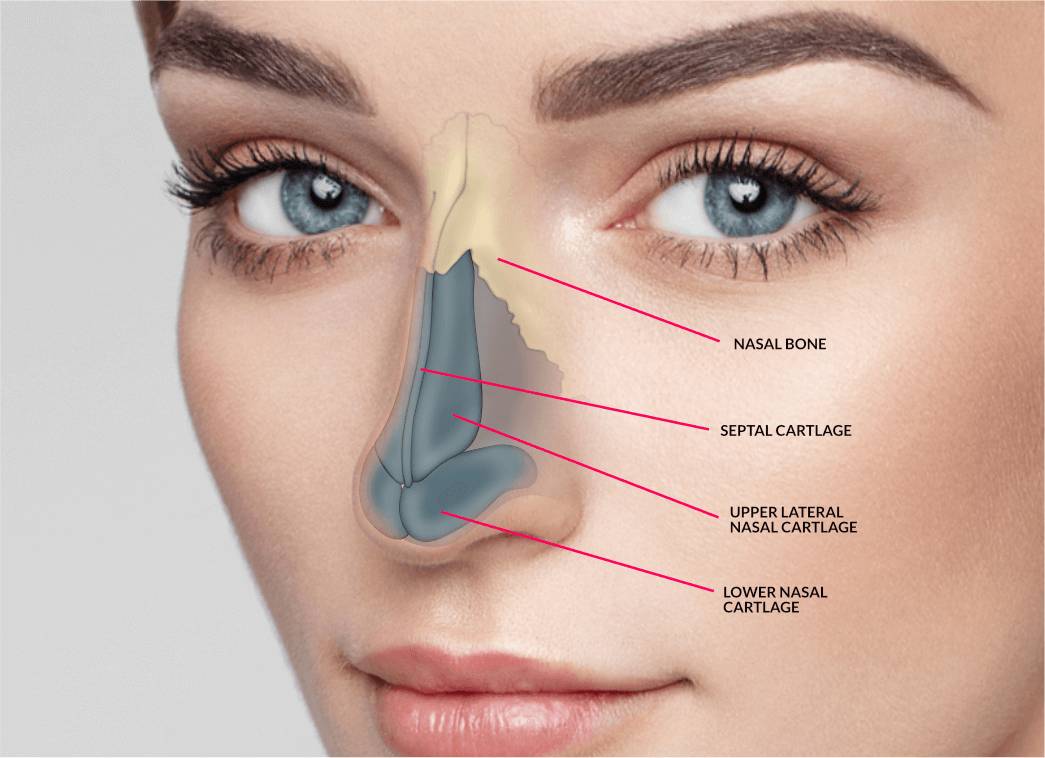
Rhinoplasty Surgery Details
Procedure Time
1 - 3 Hours
Anaesthesia
General Anaesthesia
Nights In Hospital
Day Case or 1 Night
Pain And Discomfort
1 - 2 Weeks
Risks - Common
Swelling, bruising, temporary numbness, difficulty breathing through the nose
Risks - Uncommon
Infection, excessive bleeding, asymmetry, poor healing, need for revision surgery
Follow-Up Appointments
1 week, 1 month, 3 months (after surgery)
Time Off Work
1 - 2 Weeks
Sports And Exercise
4-6 weeks post-op - light activity, 8-12 weeks post-op - full exercise
Result
Initial changes visible quickly, but final results take 6-12 months as swelling subsides.
Why Choose Rhinoplasty?
Rhinoplasty is an excellent option for those seeking to improve the appearance and function of their nose for several reasons:
- To correct a prominent dorsal hump on the bridge of the nose.
- To adjust the size and shape of the nasal tip, making it more refined.
- To narrow wide nostrils or a wide nose bridge for better facial harmony.
- To improve breathing difficulties by correcting a deviated septum or other internal nasal structures.
- To repair the nose after an injury or trauma.
- To enhance overall facial symmetry and boost self-confidence.
FREQUENTLY ASKED QUESTIONS – RHINOPLASTY
What is rhinoplasty?
Rhinoplasty is a surgical procedure to change the shape of the nose. It can be performed to improve appearance, correct a birth defect, or resolve breathing problems.
Who is a good candidate for rhinoplasty?
Ideal candidates are healthy individuals with realistic expectations who are unhappy with the appearance of their nose or have functional issues. The procedure is typically performed on individuals who have finished facial growth, usually after the age of 16.
What is the difference between an open and a closed rhinoplasty?
In an open rhinoplasty, a small incision is made on the columella (the strip of skin between the nostrils), allowing the surgeon to lift the skin and have a full view of the nasal structure. A closed rhinoplasty involves all incisions being made inside the nose, leaving no visible external scarring.
How long is the recovery?
The initial recovery period, including wearing a cast or splint, lasts about 1-2 weeks. Swelling and bruising are most prominent during this time. Most swelling subsides within a few months, but it can take up to a year for the final results to be fully visible as minor swelling resolves.
Will I have visible scars?
With a closed rhinoplasty, all incisions are internal, so there are no visible scars. An open rhinoplasty leaves a small, inconspicuous scar on the underside of the nose, which typically fades significantly over time.
Can a rhinoplasty correct breathing problems?
Yes, a rhinoplasty can address structural issues, such as a deviated septum or enlarged turbinates, that cause breathing difficulties. This is often combined with cosmetic changes to create both a beautiful and functional result.
RISKS AND COMPLICATIONS
What are the possible risks?
Risks include swelling, bruising, infection, bleeding, asymmetry, numbness, and dissatisfaction with the cosmetic result, which may require a revision surgery. Our team at Vilva Cosmetics will discuss all potential risks and how to minimize them during your consultation.
AFTERCARE
Will I need a nasal splint or cast?
Yes, a splint or cast is typically placed on the nose immediately after surgery to protect the new structure and help control swelling. It is usually worn for about one week. You may also have soft splints placed inside the nose to support the septum and internal structures.
Pre-Operative Instructions – Rhinoplasty
One Week Before Surgery
- Stop taking aspirin, ibuprofen, and other blood-thinning medications as directed by your surgeon.
- Avoid herbal supplements like ginseng, garlic, vitamin E, and fish oil.
- If you are a smoker, stop smoking at least 4–6 weeks before surgery to ensure proper healing and reduce complications.
- Arrange for a responsible adult to drive you home and stay with you for the first 24-48 hours.
Day Before Surgery
- Wash your face and hair thoroughly the night before or morning of surgery.
- Prepare a comfortable, loose-fitting wardrobe, including a button-down shirt or zip-up top that doesn't need to be pulled over your head.
- Do not eat or drink anything after midnight, including water.
- Ensure any prescribed post-operative medications are filled and ready.
Morning of Surgery
- Do not apply any makeup, deodorant, or nail polish.
- Remove all jewelry, piercings, and contact lenses.
- Take only approved medications with a small sip of water, if instructed.
- Bring required paperwork and a photo ID.
- Wear comfortable, loose clothing and flat, slip-on shoes.
Medications & Lifestyle
- Continue prescribed chronic medications only if approved by your surgeon.
- Avoid alcohol for at least 48 hours before surgery.
- Inform your surgeon immediately if you feel ill (e.g., have a cold, flu, or fever).
Post-Operative Instructions – Rhinoplasty
Wound Care & Hygiene
- Keep the nasal splint and dressings clean and dry. Do not get them wet.
- Use a cotton swab to gently clean around the stitches as directed by your surgeon.
- Avoid blowing your nose for at least 2 weeks to prevent bleeding. If you need to sneeze, do so through your mouth.
- Do not apply any creams or ointments to the surgical area unless directed by your surgeon.
Activity & Lifestyle
- Rest with your head elevated on pillows for the first few days to reduce swelling.
- Avoid strenuous activities, heavy lifting, and bending over for 4-6 weeks.
- Protect your nose from sun exposure for at least 6 months.
- Wear glasses with caution as they can put pressure on the new nasal structure. Ask your surgeon when it's safe to wear them.
Medications & Pain
- Take your prescribed pain medication as directed. The first few days are typically the most uncomfortable.
- You may experience a sore throat or dry mouth from the anaesthesia; this will resolve in a few days.
- Contact your surgeon immediately if you experience a high fever, severe pain, or excessive bleeding.
Compression & Recovery
- Bruising and swelling around the eyes and nose are normal and will peak within the first 48 hours, gradually subsiding over several weeks.
- Apply cold compresses to your cheeks and eyes (not directly on the nose) for the first 48 hours to help reduce swelling.
- Avoid wearing tight clothing that needs to be pulled over your head.
- The final result will become apparent gradually as swelling fully resolves over 6-12 months.
Rhinoplasty Results
At Vilva Cosmetic Science and Speciality Centre, our Rhinoplasty (Nose Surgery) helps refine nasal shape and improve overall harmony of the face. Explore the "before and after" transformations below, showcasing balanced, natural-looking outcomes.
Before Procedure
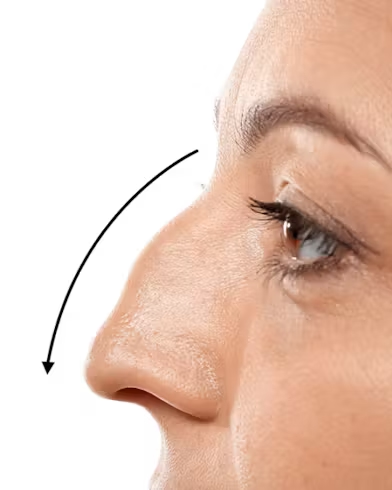
Nasal structure before rhinoplasty surgery.
After Procedure
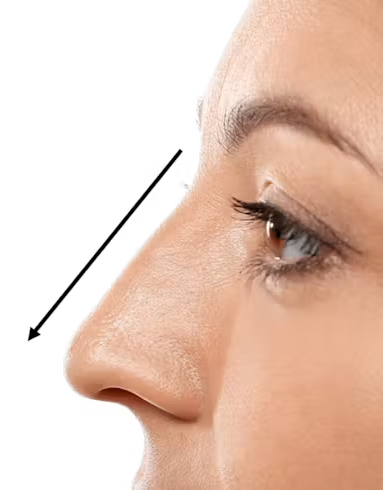
Refined nasal contours and facial balance.